
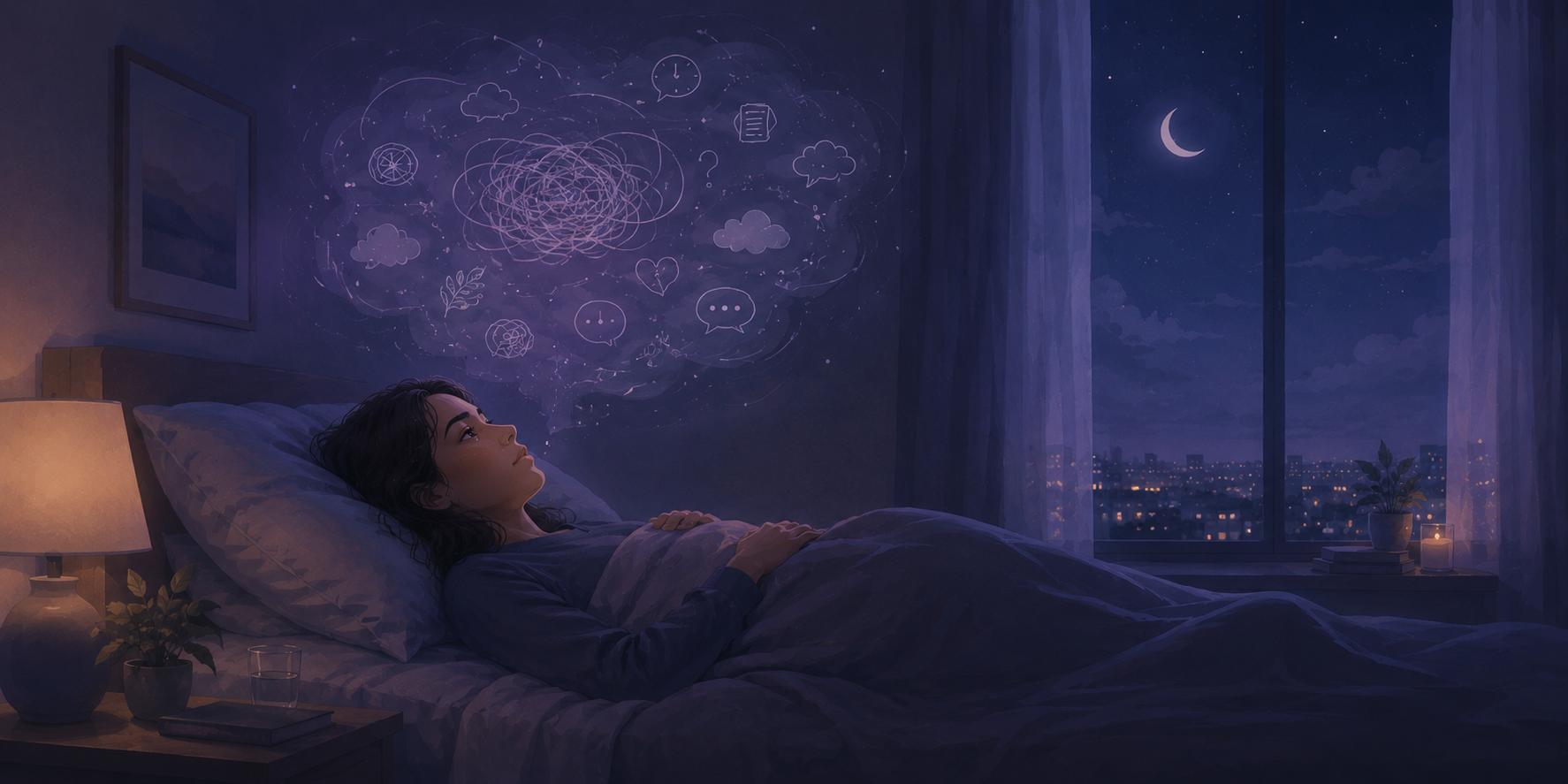
It's one of the most frustrating experiences: your body feels heavy with exhaustion, your eyes are struggling to stay open, and yet the moment your head hits the pillow, sleep refuses to come. If you've found yourself lying awake asking "why am I tired but awake," you're far from alone — and there are usually clear, understandable reasons behind it.
This article looks at what's really going on when you're tired but can't sleep, and what tends to help.
Being Tired Isn't the Same as Being Ready to Sleep
The first thing to understand is that physical tiredness and your brain's readiness to sleep are governed by different systems. You can be exhausted and still not fall asleep if your nervous system is in a heightened, alert state — even if you don't consciously feel "wired." This is why sheer exhaustion alone doesn't guarantee sleep; your mind and body both need to feel safe enough to switch off.
Racing Thoughts at Night
One of the most common culprits behind trouble sleeping is a mind that won't quiet down once the distractions of the day disappear. During the day, work, conversations, and tasks keep your attention occupied. At night, with nothing left to distract you, unresolved worries, to-do lists, and replayed conversations often surface all at once.
This is especially common if:
- You tend to suppress or avoid thinking about stress during the day
- You have upcoming deadlines, decisions, or unresolved conflicts
- You're someone who processes emotions primarily through thinking rather than talking them through
Racing thoughts at night aren't a sign of weakness — they're often simply the mind catching up on processing it didn't get to do earlier.
Anxiety and Sleep
Anxiety and sleep are closely, and often frustratingly, linked. Anxiety activates your body's stress response — increased heart rate, heightened alertness, muscle tension — all of which are the physiological opposite of what your body needs to fall asleep. This creates a difficult cycle:
- Anxiety makes it harder to fall asleep
- Poor sleep increases next-day anxiety and reduces your capacity to manage stress
- Increased anxiety the next night makes sleep even harder to reach
Many people don't consciously feel "anxious" when they can't sleep — it can show up more subtly, as a general sense of restlessness, a racing heart, or simply an inability to relax, even without a specific worry attached.
Common Insomnia Causes
Beyond racing thoughts and anxiety, several other factors commonly disrupt sleep:
- Irregular sleep schedule — inconsistent bedtimes and wake times confuse your body's internal clock
- Screen exposure before bed — light from phones and laptops can delay the release of melatonin, the hormone that signals it's time to sleep
- Caffeine or stimulants, even earlier in the day, staying in your system longer than expected
- Stress and unresolved emotional tension, whether related to work, relationships, or unspoken worries
- Napping too late or too long in the day, reducing your body's natural sleep pressure by bedtime
- An overstimulating environment — noise, light, or an uncomfortable room temperature
- Underlying conditions, such as depression, chronic pain, or sleep disorders like sleep apnea
Why It Feels Worse the More You Try
Ironically, the harder you try to force sleep, the more elusive it often becomes. Watching the clock, calculating how many hours are left, and feeling frustrated all activate the same alert nervous system state that prevents sleep in the first place. This is sometimes called "sleep effort" — the paradox where trying too hard to sleep makes falling asleep harder, not easier.
What Tends to Help
While persistent sleep problems are worth discussing with a professional, a few general approaches are commonly recommended:
- Keep a consistent sleep and wake time, even on weekends, to stabilise your body's internal clock
- Create a wind-down routine in the 30–60 minutes before bed — dim lighting, no screens, calming activities
- Get out of bed if you can't sleep after 20–30 minutes, rather than lying there frustrated; return only when you feel drowsy
- Write down racing thoughts or tomorrow's to-do list before bed, to help your mind "close the loop" rather than carrying it into sleep
- Limit caffeine in the afternoon and evening, since its effects can last longer than expected
- Practice a calming routine, such as slow breathing or gentle stretching, to signal to your body that it's safe to relax
When to Seek Professional Support
It's worth consulting a professional if:
- Sleep problems persist most nights for several weeks or more
- Sleeplessness is accompanied by persistent anxiety, low mood, or racing thoughts you can't manage on your own
- Daytime functioning — concentration, mood, energy — is significantly affected
- You've tried consistent sleep hygiene changes without meaningful improvement
- You suspect an underlying condition, such as a sleep disorder or anxiety disorder, may be contributing
A doctor can help rule out physical causes, while a therapist can help address the anxiety, racing thoughts, or stress patterns that are often at the root of ongoing sleep problems — particularly through approaches like CBT for insomnia, which has strong research support.
If sleeplessness has become a regular part of your nights, it's worth exploring what's underneath it, rather than just managing the exhaustion day after day. TherapyHelps.in can match you with a psychologist who can help address the anxiety, stress, or thought patterns often behind ongoing sleep problems.