
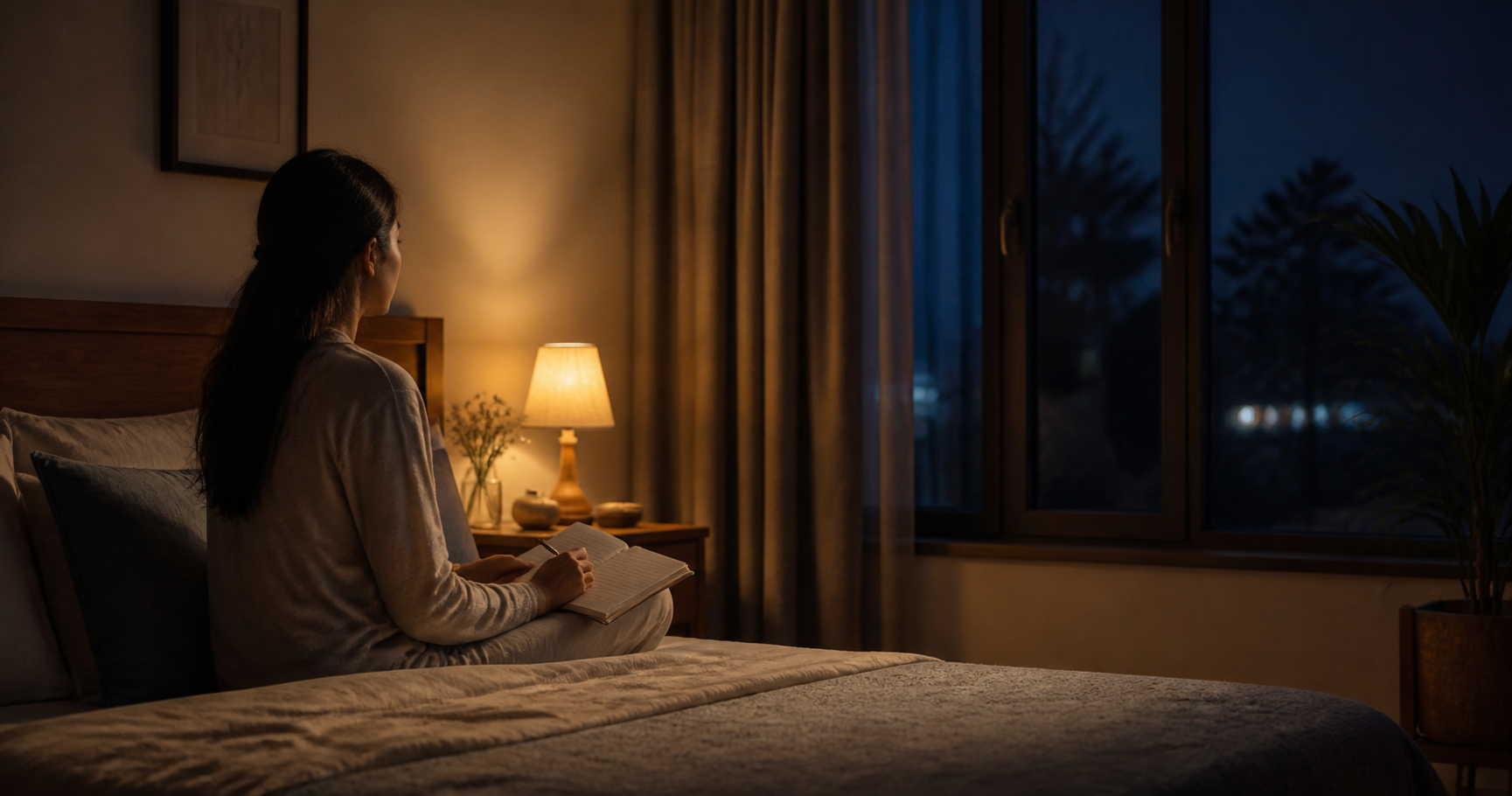
Anxiety at Night: Why It Happens and How to Calm It
It can be a lonely feeling: the day is finally quiet, but your mind is not. You may replay conversations, worry about tomorrow, notice your heart beating faster, or feel wide awake even though you are exhausted. This is often called night-time anxiety or bedtime anxiety. It is common, and it is not a sign that you are doing sleep ‘wrong’.
Anxiety can become more noticeable at night because there are fewer distractions and more space for worries to surface. Poor sleep can then make anxiety harder to manage the next day, creating a tiring loop. The good news is that a few gentle habits can help you interrupt that loop. If anxiety is persistent or is affecting daily life, support is available too.
Key takeaways
- Night-time anxiety often feels stronger when the day slows down and worries have room to take over.
- Slow breathing, grounding, and moving worries onto paper can help your body and mind settle in the moment.
- A consistent wind-down routine and a sleep-friendly bedroom can reduce common sleep disruptions over time.
- If this happens often, feels overwhelming, or affects your life during the day, a mental-health professional can help.
Why anxiety can feel worse at night
Night-time anxiety is not a separate diagnosis. It is a pattern where anxious thoughts or physical symptoms become especially noticeable when you are trying to rest. During a busy day, work, family, study, and screens can keep your attention occupied. Once those distractions stop, unfinished tasks, fears, and ‘what if’ thoughts can feel much louder.
Your body may join in too. Anxiety can bring a racing heart, tense muscles, a tight chest, sweating, nausea, or a sense of being on edge. These sensations can feel alarming when you are lying in a dark, quiet room. They are part of the body’s stress response, but they still deserve care and attention. The National Institute of Mental Health explains that anxiety becomes a health concern when it does not go away, worsens, or interferes with daily life.
Sometimes the worry is clearly connected to a difficult situation. Other times it may be fuelled by stress, grief, a change in routine, caffeine, alcohol, pain, illness, a medication, or several things at once. You do not need to solve the whole cause at 1 a.m. Start by helping yourself feel safe and settled in that moment.
If overthinking is a frequent part of your day as well as your nights, TherapyHelps’ guide to anxiety and overthinking support may help you put words to what you are experiencing.
What to do when anxiety shows up at bedtime
When your mind is racing, aim for comfort rather than forcing sleep. Trying to make yourself sleep immediately can add pressure. Choose one or two of the ideas below and give them a few minutes. You do not have to do every step perfectly.
1. Slow your breathing
Inhale gently through your nose, exhale through your mouth — counting slowly to 5 on each can help signal calm to your body. This NHS breathing exercise is designed for stress, anxiety, and panic. The goal is not to erase every thought; it is to give your body a calmer signal.
2. Name what is happening
A simple internal statement like "I'm having an anxious moment, and I can take this one step at a time" creates distance from the worry.
3. Ground yourself in the room
Notice five things you see, four you feel, three you hear, two you smell, one you taste.
4. Park the worry on paper
Write the worry in one sentence, plus one small next step for tomorrow — or note that there's nothing to act on tonight. A planned ‘worry time’ earlier in the evening can also help reduce racing thoughts at bedtime; NHS Every Mind Matters describes this approach.
Build a gentler routine before sleep
Small, repeatable habits usually work better than a long list of rules. Think of the hour before bed as a transition, not a test you have to pass. Start with one change that feels realistic, such as putting your phone away 20 minutes earlier or making a cup of non-caffeinated tea.
- Keep a similar wake-up time
- Make your bedroom quieter, cooler, and darker
- Reduce bright screens before bed
- Notice evening stimulants: Caffeine, nicotine, and alcohol
- Move during the day
These ideas are drawn from NHLBI’s healthy sleep guidance. They are not a cure for every sleep problem, and they work best when you treat them as experiments rather than strict rules.
If you are often tired but cannot switch off, you may also find TherapyHelps’ article Why Can’t I Sleep Even When I’m Tired? useful. It explores several reasons sleep can feel out of reach.
When it helps to get out of bed for a little while
If you have been lying awake and getting more frustrated, it can help to take a short break from the bedroom. Return to bed when you feel sleepier. This can help your brain reconnect the bed with rest instead of hours of struggle. If you have insomnia that keeps happening, a clinician can help you use a more personalized approach; TherapyHelps’ insomnia support guide explains how therapy can address the thoughts and habits that keep the nervous system alert at night.
How therapy can help with anxiety before sleep
Therapy can give you a private place to understand the patterns behind night-time anxiety and practise skills that fit your life. A therapist may help you notice thought loops, work through stressful events, set boundaries around work or family pressure, and build a realistic sleep routine. Cognitive behavioural therapy (CBT) is one approach that helps people examine the link between thoughts, feelings, and actions. TherapyHelps’ plain-language explanation of CBT describes how this skills-based approach is often used for anxiety and sleep concerns.
You do not need to wait until things feel severe to ask for help. If you are curious about what sessions are like, read what happens during a first therapy session. A therapist can work with you on the anxiety itself, rather than simply telling you to “sleep better.”
When to speak to a doctor or mental-health professional
Consider reaching out if anxiety at night is happening most nights, has lasted for weeks, is affecting work, study, relationships, or your ability to function during the day. It is also worth discussing with a doctor if you have new physical symptoms, pain, breathing problems, or concerns that a medication or health condition may be affecting sleep.
Seek urgent help now if you might harm yourself or someone else, feel unable to stay safe, or have symptoms that could be a medical emergency. In India, call 112 or go to the nearest emergency department. For free 24/7 mental-health support, Tele-MANAS is available on 14416. TherapyHelps is a scheduled counselling service and is not an emergency service.
Frequently asked questions
Why do I get anxious only at night?
Worries often become more noticeable at night because the day is quieter and there are fewer distractions. Stress, a disrupted routine, stimulants, physical discomfort, or fear about not sleeping can all add to the pattern.
How can I calm anxiety quickly in bed?
Try a slow, comfortable breathing exercise, grounding through your senses, or writing down the worry and one possible next step for tomorrow. Focus on settling your body rather than demanding instant sleep.
Can lack of sleep make anxiety worse?
Yes. Poor sleep can make it harder to cope with stress and emotions the next day, while anxiety can make sleep harder. A consistent routine and support for the underlying anxiety can help interrupt this cycle.
Is anxiety at night a sign of an anxiety disorder?
Not always. Many people have occasional anxious nights. It is a good idea to seek professional guidance when anxiety persists, grows harder to manage, or interferes with everyday life.
Should I use my phone when I cannot sleep?
Try to avoid bright, stimulating phone use when possible. A quiet audio exercise with the screen dimmed or off may be more helpful than scrolling through messages or social media.
A kinder next step
Night-time anxiety can make a familiar room feel like a difficult place to be. Start small: breathe slowly, write down the worry, and give yourself permission to rest without solving everything tonight. If the pattern keeps returning, talking it through with a qualified professional can make bedtime feel less like a battle and more like a place to recover.
For ongoing anxiety, sleep concerns, or stress that feels hard to manage alone, explore the areas TherapyHelps can support and choose a next step that feels right for you.