
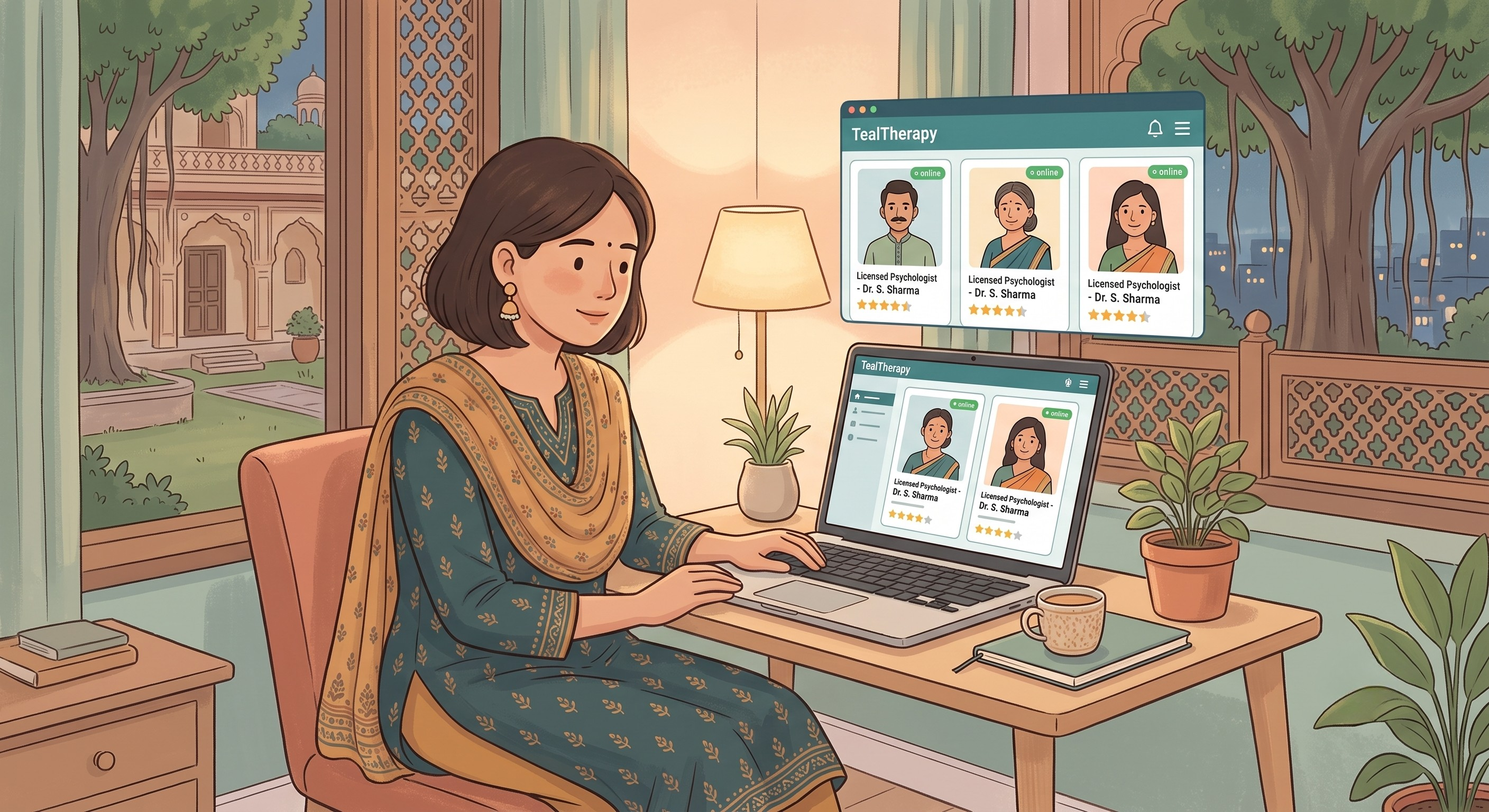
Deciding to start therapy is a big step. But once you've made that decision, a new question usually follows: how do you actually find the right person to talk to? With so many titles — psychologist, psychiatrist, counsellor, therapist — it's easy to feel confused before you've even booked a session.
This guide breaks down exactly how to find a therapist in India, what each professional does, and what to look for so you can make a confident, informed choice.
Different Types of Mental Health Professionals
Not all mental health professionals do the same thing. Understanding the differences up front will save you time and help you get matched with the right kind of support from the start.
Psychologist vs Psychiatrist
This is the most common point of confusion, so let's settle it clearly:
- Psychiatrists are medical doctors (MBBS, followed by an MD in Psychiatry). They can diagnose mental health conditions and prescribe medication. Many also offer therapy, but their core training is medical.
- Psychologists typically hold a master's or doctoral degree in psychology. They cannot prescribe medication, but they are trained in therapy techniques, assessments, and talk-based treatment.
In short: if you need medication as part of your treatment, you'll need a psychiatrist. If you're looking primarily for talk therapy, a psychologist is usually the right starting point. Many people work with both, in coordination.
Clinical Psychologist
A clinical psychologist has specialised training (often an M.Phil or equivalent) specifically in diagnosing and treating mental health conditions such as depression, anxiety, OCD, and trauma. They're trained to work with more complex or long-standing psychological concerns.
Counsellor
Counsellors typically hold a degree or diploma in counselling psychology. They're well suited to shorter-term, focused concerns — relationship issues, stress, grief, or life transitions. Counselling tends to be more present-focused than deep clinical work.
Therapist
"Therapist" is often used as an umbrella term in India, referring to psychologists, counsellors, or clinical psychologists who offer talk therapy. When you see "therapist" on a platform, it's worth checking their specific qualification underneath the title.
Credentials to Look For
When evaluating anyone you're considering working with, check for:
- A recognised degree in psychology, clinical psychology, or counselling (from a UGC-recognised university)
- Registration with the Rehabilitation Council of India (RCI), where applicable
- Relevant specialisation or training for your specific concern (e.g., trauma, couples therapy, addiction)
- Supervised clinical experience, not just academic qualification
- Clear, transparent communication about their approach and experience
Don't hesitate to ask a potential therapist about their credentials directly — a good professional will answer openly.
Online vs Offline Therapy
Both formats are valid, and the right choice depends on your comfort and circumstances.
Online therapy (psychologist online India):
- Greater flexibility with scheduling
- Access to specialists outside your city, especially useful in smaller towns
- Comfort of attending sessions from your own space
- Often more affordable, with lower overheads passed on to you
Offline (in-person) therapy:
- Some people find face-to-face connection easier to build trust with
- Useful for certain assessments or when in-person cues matter
- May suit those who prefer a dedicated space away from home
Neither format is inherently "better" — many people now search "therapist near me" and "online therapist" simultaneously, and choose based on what actually gets them to book and attend consistently.
Questions to Ask Before You Start
Before committing to a therapist, it's worth asking:
- What is your educational background and area of specialization?
- Have you worked with concerns similar to mine before?
- What does a typical session with you look like?
- How do you measure progress over time?
- What are your fees, session length, and cancellation policy?
Asking these questions isn't rude — it's a normal, healthy part of choosing someone you'll be vulnerable with.
Red Flags to Watch For
Be cautious if a therapist:
- Is vague or evasive about their qualifications
- Guarantees quick fixes or promises to "cure" you in a fixed number of sessions
- Breaks confidentiality casually or shares other clients' details
- Makes you feel judged, dismissed, or rushed
- Pushes products, supplements, or unrelated services during sessions
- Doesn't create space for your questions or concerns
Trust your instincts. A good therapeutic relationship should feel safe, respectful, and collaborative — not uncomfortable or one-sided.
What TherapyHelps Does Differently
Finding the right fit shouldn't feel like guesswork. At TherapyHelps.in, we simplify the search for a therapist in India by:
- Verifying credentials and specializations of every listed professional
- Matching you based on your specific concerns, preferences, and comfort level
- Offering both online and offline options, so you can choose what works for you
- Being transparent about fees and session structure upfront
- Giving you the flexibility to switch therapists if the fit isn't right, without awkwardness
You don't need to spend weeks scrolling through directories or guessing who's qualified. Tell us what you're looking for, and we'll help match you with a therapist suited to your needs — so you can spend less time searching and more time getting the support you deserve.